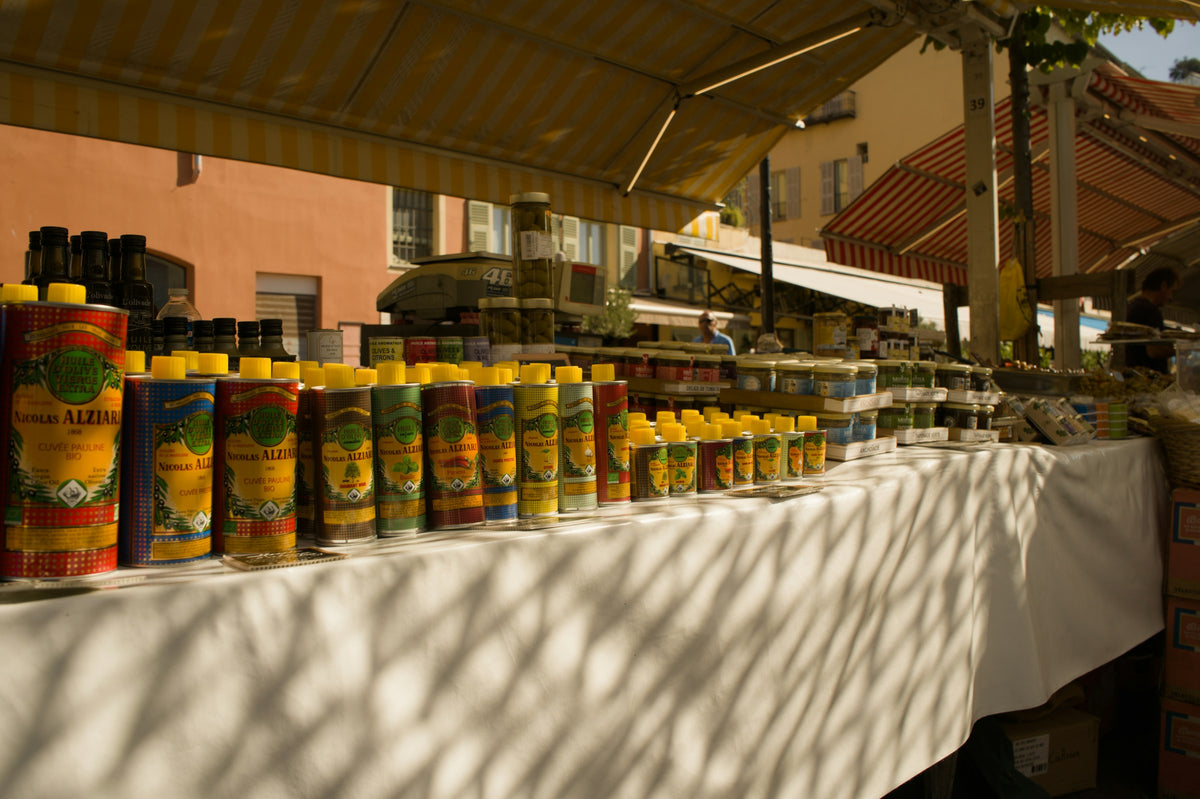
A supermarket label can tell you an olive oil's declared grade, pack size and some production information. Unless it provides a relevant test result, it cannot tell you the exact polyphenol concentration. Neither a supermarket shelf nor a specialist shop guarantees a particular number.
Extra virgin is the starting point
The IOC defines extra virgin olive oil through production, chemical and sensory criteria. It is not a category defined by a minimum total-polyphenol result. That distinction applies equally to supermarket brands, estate oils and online purchases.
What to check on the pack
- The full grade description, rather than the word olive alone.
- Harvest information and a best-before date.
- Country and producer information sufficient to understand provenance.
- A batch reference that can connect the oil to supporting information.
- Packaging and the conditions in which it is displayed.
A dark bottle or opaque tin helps manage light exposure, but does not prove the contents were fresh at packing or kept cool during distribution. The review by Jimenez-Lopez and colleagues explains why light, oxygen, temperature and packaging all matter.
When the number is missing
Ask the producer whether a current, batch-specific phenolic analysis is available. An absent number is not proof of a low result. Equally, a variety name, green colour or peppery description is not a substitute for measurement. The IOC publishes methods for analytical assessment.
Avoid unsupported brand tables
A credible comparison should identify the exact products, dates and methods used. Do not assume that one historic result applies to every pack a brand sells. Storage research shows cultivar-specific changes over time, making current evidence especially useful.
This guide does not assert current stock, prices or phenolic results for any supermarket. For a method-led comparison, read how to compare highest-polyphenol claims. The same standard of evidence should apply to GRO as to any other producer.


